Why didn't I say that during the interview!?
Interviewing is keeping me up at night. Here are a few of the answers that showed up after the call ended.
TL;DR
The best answers always come three days later in the shower. But every missed kick is just practice for the next one. Here are the answers I wish I'd given.

Interviewing is keeping me up at night.
As soon as I get off a call, I start replaying everything I should have said. You know that feeling when you’re in the shower three days after an argument and suddenly think of the perfect comeback? It’s exactly like that.
The answer was there. You knew it. You’ve answered it before.
But for whatever reason, the words didn’t show up when you needed them.
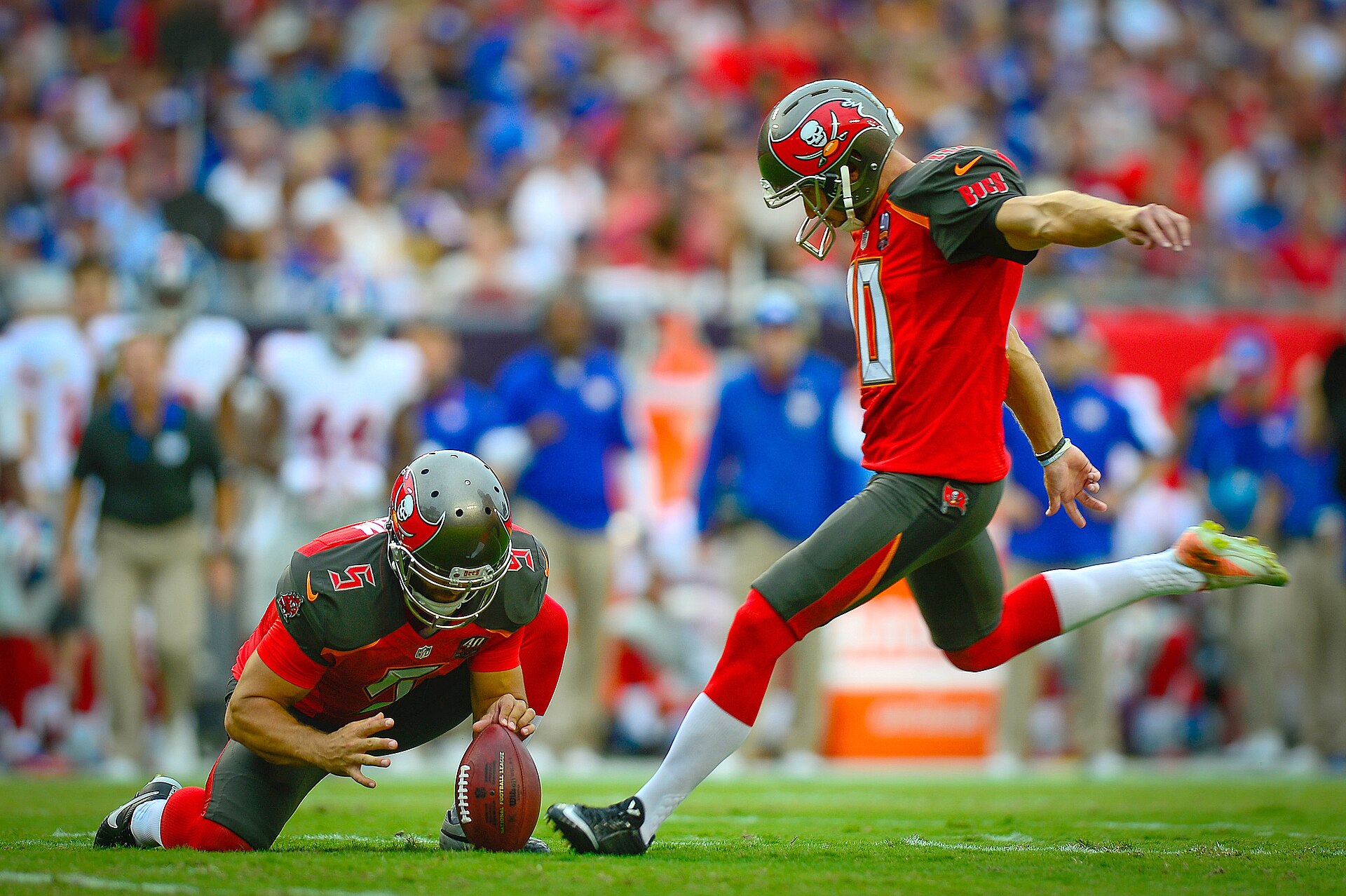
As a former football kicker, I’ve felt this before.
There’s a special kind of pressure when you’re lining up for a game-winning field goal. Forty-plus women standing on the sidelines holding their breath. The game on your foot. The expectation that you’ll save the day.
The difference is that kicking is predictable.
I can practice the same kick hundreds of times. Put the ball in the same spot. Count the same number of steps. Sing the same song in my head. When game day arrives, I’m a machine.
Interviews don’t work that way.
You can prepare. You can practice. You can build stories and rehearse examples. But people are unpredictable. Questions come out of nowhere. The one answer you highlighted in your notes somehow vanishes the second someone asks for it.
Lately, I’ve felt like I’m missing that damn field goal. When I replay these interviews, the answers are obvious. Not because I suddenly became smarter; because the pressure is gone.
So here are a few of the answers that showed up after the interview ended.
How do you prioritize and make tradeoffs to move faster?
I think about dependencies first.
What can I do myself?
What requires two people?
What requires an entire team?
There’s almost always a way to start moving. Momentum matters.
After that, I think about urgency, impact, and timing. Some opportunities have a short shelf life. Others can wait. The best solution isn’t always the most valuable if it takes six months longer to deliver.
Most organizations don’t have a shortage of ideas. They have a shortage of execution. My job is usually helping teams find the fastest path to meaningful outcomes.
How do you measure product success?
Any way I can.
I’ve worked at companies with sophisticated analytics, research programs, and monitoring systems that let us trace the full story—from adoption and engagement to retention, expansion, and advocacy. In those environments, the challenge isn’t finding data. It’s figuring out which signals actually matter and where users discover value.
I’ve also worked at companies where none of that existed. When the tooling isn’t there, you get creative.
I’ve built custom scorecards to understand user needs. I’ve used surveys like SUS and UMUX-Lite to establish experience benchmarks. I’ve pieced together stories from page views, click paths, task completion rates, support tickets, and customer interviews. I’ve even looked at SEO trends around common pain points to identify where users were struggling before they ever reached the product.
The truth is that measuring success isn’t about having perfect data. It’s about being relentlessly curious.
With fewer tools, you have to invent ways to find answers. With more tools, you have to get sharper about defining what success actually means.
No blockers. Only vibes. If understanding users is truly a priority, there’s always a way to measure whether you’re helping them succeed.
What’s the difference between content design and conversational design?
Traditionally, content design focused on shaping product experiences: journeys, narratives, information architecture, and eventually the words users see.
Conversational design was largely associated with chatbots and scripted interactions.
Today, that line is disappearing.
Conversational design is increasingly about designing AI-powered interactions across entire experiences—recommendations, personalization, copilots, assistants, and intelligent workflows.
The best content strategists are learning conversational design. The best conversational designers understand product experience.
The future isn’t about protecting titles. It’s about solving problems.
Why do you want this job?
Because I like challenges. I like speed. I like innovation. I like figuring out things that don’t already have answers.
Over the last few years I’ve found myself happiest in environments where there isn’t a playbook. Where the team is moving quickly, the problems are messy, and everyone is building while they’re learning.
Give me something meaningful to improve and I’ll happily jump into the deep end.
How do you get people to adopt new tools, processes, or AI?
Show. Don’t tell.
Nobody wants an electric screwdriver.
They want a picture hung on the wall. They want furniture assembled. They want a problem solved.
People don’t adopt technology because it’s interesting. They adopt technology because it makes their lives easier.
When teams focus on tools instead of outcomes, they end up with a wall full of unnecessary holes.
Adoption happens when people can clearly see how something helps them accomplish something they already care about. That’s true for our users and our internal partnerships.
I called my projects “side hustles.”
Yeah… probably not my best wording.
What I meant was this:
As a leader, my goal is to build a team that doesn’t need my permission for every decision.
When people grow into leaders and experts in their own domains, they move faster without me. That’s success.
The result is that I get time back.
And because I’m incapable of sitting still, I use that time to find new problems to solve.
Those “side hustles” weren’t distractions. They were some of the highest-impact initiatives I worked on.
What do you want in your next role?
Three things.
Freedom. Give me room to explore and experiment.
Responsibility. Hold me accountable for something that matters.
Respect. Put me on a team that believes in what they’re building.
I’ve learned that I enjoy smaller companies, innovation groups, and environments where things are changing quickly.
I don’t need chaos.
But I do love complex problems, ambitious goals, and teams moving fast.
The good news
The good thing about blowing an answer in one interview is that you’ll absolutely crush it in the next one.
Every awkward answer becomes a stronger story. Every missed opportunity becomes preparation. Every mistake becomes practice.
Interviewing is a skill and like every skill, repetition matters.
The market is tough right now. Most people are looking for months, not weeks. So I’m trying to treat every interview as training.
Not every kick goes through the uprights.
But the next one might.
And if you’re interviewing right now, you’re probably doing better than you think. We’re all carrying around answers we wish we’d given. The funny thing is that timing matters almost as much as skill.
So keep showing up. Keep taking swings. Keep kicking.
I’ll make the next field goal.
Now that I’ve shared the answers I would have said — I can sleep better tonight.
More Stories
Let's Just Do It
No one cares how you execute anymore — they care about results. While I find my company job, I'm looking to help you get it done.
Staying Calm in the AI Storm
AI is not the real threat to UX. The bigger risk is mistaking speed for intent and letting product experiences slide into an efficient, average sameness that fits no one.
Manage like a med school dean, not a Japanese game show host
High hiring standards only matter if leadership builds the system people need to succeed once they are in.
So… I work for the internet
A plainspoken look at what UX work actually is: listen, respond, measure, and make complex products easier to use.
Want to talk through how this kind of thinking could apply to your product?