Manage like a med school dean, not a Japanese game show host
High hiring standards only matter if leadership builds the system people need to succeed once they are in.
TL;DR
I think like a med school dean, not a game show host. This is a team sport. Get in, get supported, and help each other succeed, not survive.

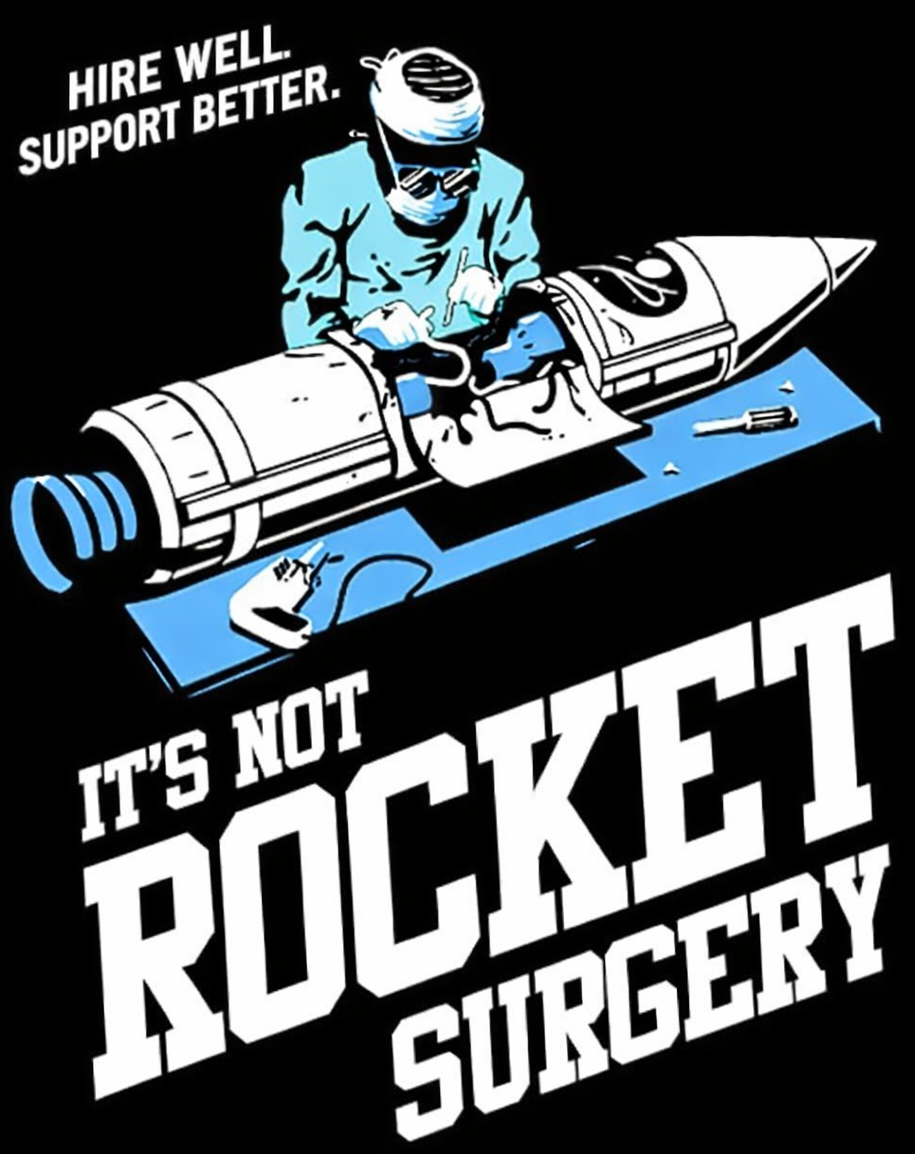
How to build a great team, culture, and ultimately amazing products.
I think like a med school dean. Not a game show host. That is not a metaphor I throw around lightly. It is the core philosophy behind how I build, lead, and protect team culture.
The Harvard standard is the starting point
On numbers alone, you have a higher chance of getting into Harvard Medical School than getting a job on my team.
Not because of scrutiny. Because of sheer volume.
Harvard Medical School accepts roughly 2 to 3 percent of applicants.
But here is the part that matters more:
Harvard’s graduation rates are around 98 percent.
Let that sink in.
If your hiring bar is that high, your success rate after hiring should be even higher.
Mine is roughly 95 percent retention.
That is not an accident.
Of course, there are always outliers.
People leave for personal reasons, new opportunities, or broader company changes. That is part of any healthy system.
What is not acceptable is preventable attrition.
If performance issues are common, that is not a people problem. That is a system problem.
This is where most teams get it wrong.
Hiring is the beginning
They treat hiring like the finish line. I treat it like the starting point.
Because once someone joins, the responsibility shifts.
It is no longer about evaluation. It is about enablement.
At Harvard Med, they do not admit students and then sit back to see who makes it.
They build infrastructure for success:
- clear expectations
- structured learning paths
- ongoing feedback
- deep investment in development
Their goal is not to filter out bad doctors.
Their goal is to create great ones.
That is exactly how I build teams.
I hire carefully. Very carefully.
But once you are in, my job changes completely.
My responsibility is to create a system where:
- expectations are clear
- growth is intentional
- feedback is consistent
- success is achievable
Because if someone is struggling on my team, I do not start with “what is wrong with them?”
Performance issues happen. They just should not be the headline. If they are, something upstream is broken.
I start with “what is missing from the system?”
Safe does not mean easy
This is what creates a safe team culture.
Not “safe” as in easy.
Safe as in:
- you know what success looks like
- you are not guessing how you are being evaluated
- you are supported when things get hard
- you can focus on doing great work instead of protecting yourself
That is where real performance comes from.
Too many organizations confuse pressure with performance.
They believe intensity creates excellence.
But unclear expectations, constant comparison, and fear-based environments do not produce great work. They produce burnout, hesitation, and politics.
That is game show management.
Survival is not teamwork
If you have ever worked somewhere that felt like that, where the rules were unclear and success felt like survival, you are not alone.
If it starts to feel more like Takeshi’s Castle than a place to grow, something is off.
Because that is the difference:
A game show is built for individual survival.
A real team is built for collective success.
| Game shows are about | Great teams are about |
|---|---|
| elimination | support |
| competition | shared goals |
| watching who falls off | making sure no one falls off in the first place |
We have all been in environments that blur that line.
But that is not the system I build.
Leadership means care plus structure
That difference, between survival and support, shows up everywhere from medicine to space exploration.
In Moonshot, Mike Massimino puts it simply:
“The first rule of leadership is to find a way to admire and care about every member of your team.”
That is the job.
Not just setting direction. Not just measuring performance.
- actually caring
- actually investing
- actually building relationships strong enough that people can do their best work together
Because when the bar to get in is that high, it stops being about proving you belong.
It becomes about making sure everyone succeeds.
My philosophy
Make getting in the hardest part. Then build a system where people succeed.
Because great teams are not built by seeing who survives.
They are built by people who know they are part of something bigger than themselves and act like it.
Sources
More Stories
Let's Just Do It
No one cares how you execute anymore — they care about results. While I find my company job, I'm looking to help you get it done.
Why didn't I say that during the interview!?
Interviewing is keeping me up at night. Here are a few of the answers that showed up after the call ended.
Staying Calm in the AI Storm
AI is not the real threat to UX. The bigger risk is mistaking speed for intent and letting product experiences slide into an efficient, average sameness that fits no one.
So… I work for the internet
A plainspoken look at what UX work actually is: listen, respond, measure, and make complex products easier to use.
Want to talk through how this kind of thinking could apply to your product?